
A Day in the Life of a Hotelier
The Story Behind the Growth of Punta Mita
The alarm goes off at 5:45, the way it has most mornings for the sixteen years I’ve been on this peninsula, and by ten past six I’m out on the jogging paths for my daily 5k, watching the light come up over the Sierra Madre before the property fully wakes up. I finish most mornings the same way — hitting balls on the range — though I’m never quite off duty out there; there’s always one eye open, on the bunkers, the crews, the way the greens are holding up. I’ve gotten into the habit of snapping photos of whatever catches that eye and firing them straight off to Ricardo Trueba, who runs our master condominium association and is, without a doubt, one of the most professional colleagues I’ve had in this career. Half the small fixes around here happen because Ricardo saw the photo before I’d even finished my swing. It’s a routine I’ve learned to protect, and it’s also, if I’m honest, the only part of the day I have to actually think about how strange and improbable this whole place still is.
I was reminded of that again this week, reading a piece in Whitepaper by the journalist Rene Lankenau, published August 14th, titled “Punta Mita: The Development That Economically Reshaped a Stretch of Nayarit.” It opens with a question I’ve been asked, in one form or another, by almost every visiting journalist, investor, and curious guest I’ve met over the years: how do you engineer a 1,000% increase in international tourist arrivals to a region that once had nothing more than small fishing communities?
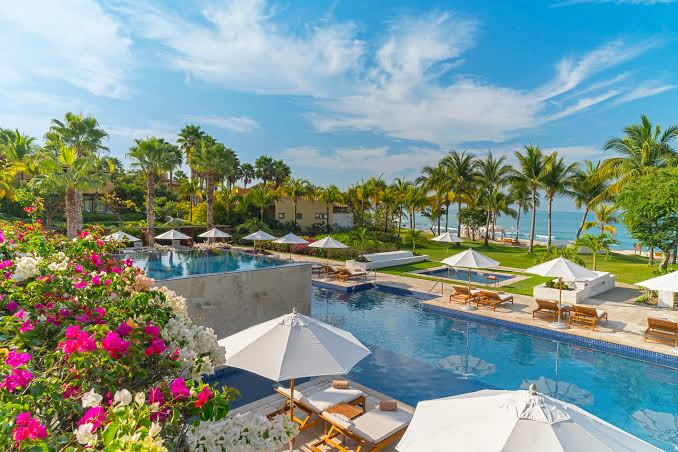
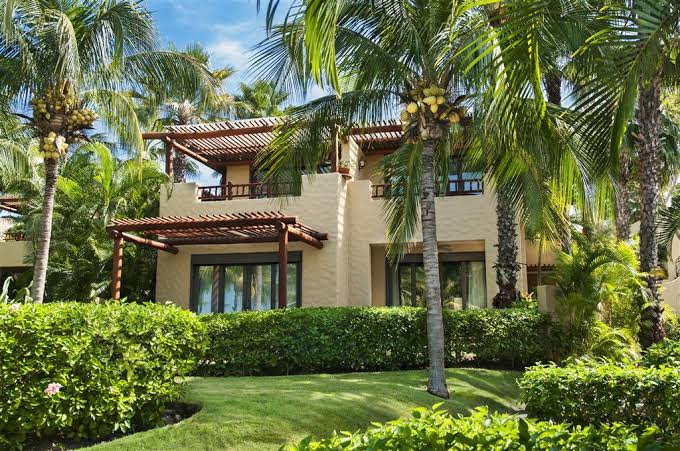
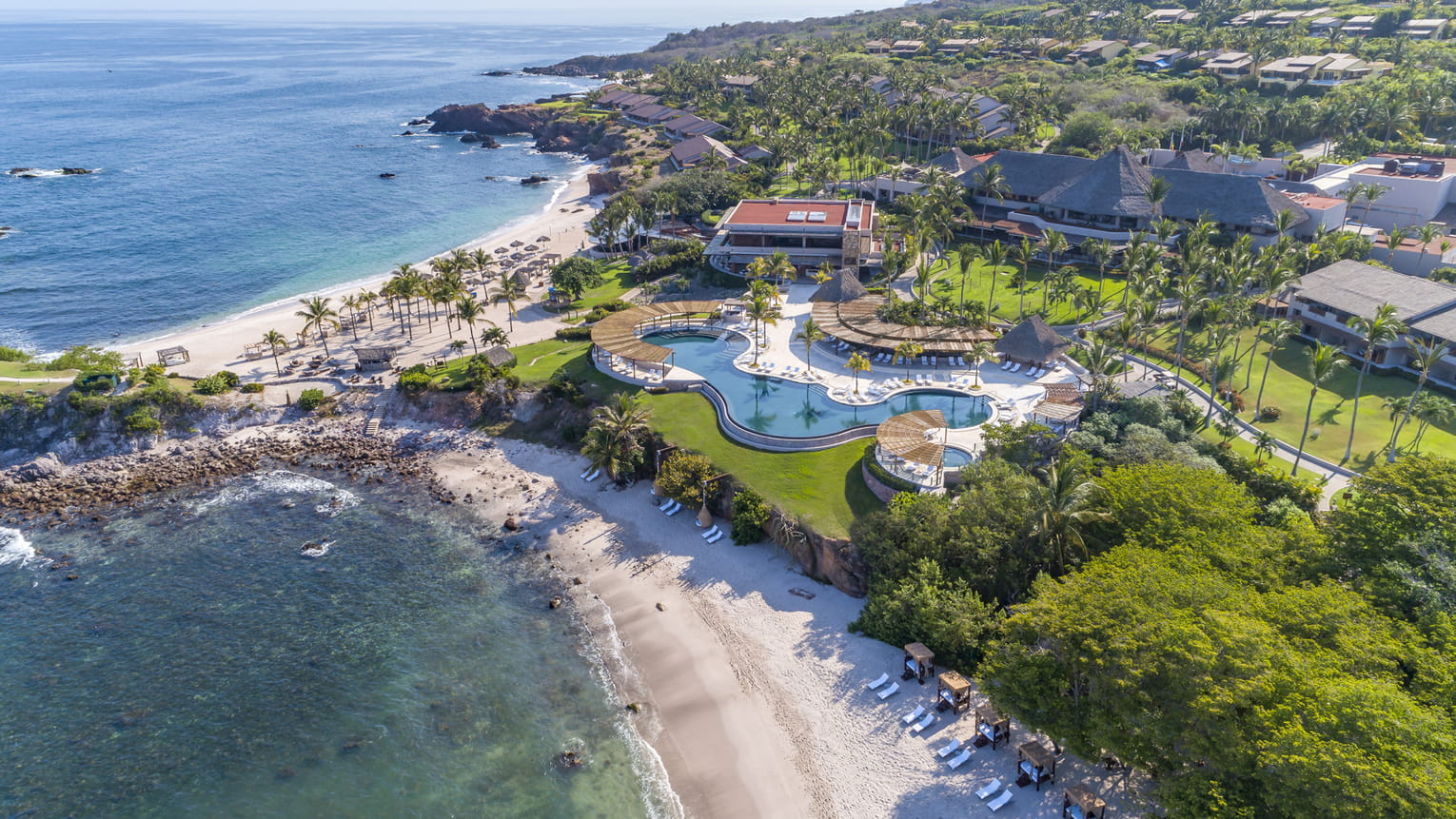
Lankenau’s answer is the economist’s answer, and a good one. Between 2015 and 2025 alone, Punta Mita generated roughly US $1.2 billion in revenue for DINE, the developer that has spent just over thirty years building this place out of 700 hectares of what used to be jungle, beach, and a small fishing community — roughly twice the size of Central Park, now home to three hotels, two golf courses, and around 850 residences, with two more hotels under construction and DINE projecting the count will near 1,000 before 2030. The number of five-star hotel rooms in Nayarit has multiplied 9.5 times in twenty-five years. Bahía de Banderas, the municipality that holds us, has grown from 40,000 residents in 1990 to more than 220,000 in the 2025 census, while the towns around it barely moved. Those are the numbers a whitepaper is built to carry, and they’re not wrong. But they’re not the whole story either, and after sixteen years of watching this place grow from the inside — plus everything I’ve absorbed from the people who were here for the decades before me — I think the missing piece is the one I get to see on my morning run: not what was built, but how, and for whom, and why it still feels like something people belong to rather than just something they bought into.
The vision, and the man who insisted on it
None of this happens without Fernando Senderos Mestre, who has chaired KUO — DINE’s parent conglomerate — since 1989, and whose family had already spent decades building serious, ambitious projects across Mexico before anyone had heard of Punta Mita. Lankenau’s piece traces the corporate lineage carefully: Desc becoming KUO, real estate spinning off into DINE, the long track record of developments like Bosques de las Lomas and Bosques de Santa Fe. What that history doesn’t fully capture, and what I’ve heard directly from people who were in the room in the mid-1990s, is the sheer stubbornness it took to get Isadore Sharp, Four Seasons’ founder, out to a stretch of coastline that other hotel groups had already passed on. Sharp got hooked, as the story goes, and that single relationship “legitimized” the entire project to the American and Canadian travelers who would become its first buyers. But it was Senderos Mestre’s insistence on doing this as a planned community — mapping out three decades of development before the first villa was ever sold — that made the difference between a resort and a place. Everything here, from the golf course to the beach clubs, was built as a ‘layer of value’ on top of the last, deliberately, so that it would all feel like part of the same whole. You can feel that discipline walking the grounds even now. There are no improvised streets here. Nothing was left to chance, and I think that clarity of vision is the real reason the rest of it was possible.






Building something people belong to
Here’s what I’ve learned running a hotel inside a project like this: infrastructure and amenities get people here once. Community is what gets them to come back, buy the villa, put their kids through a Mexican school year, and eventually call this home instead of a destination. In the earliest years, before I arrived, nearly all our buyers were retirees in their sixties. By the time I got here in 2010, that was already shifting, and today it’s common to meet buyers in their fifties, even their forties — families building a life here, not just a vacation. That shift didn’t happen by accident. It happened because, event by event and relationship by relationship, this stopped being a gated development and started being a community with its own rhythms: friendships that span a golf cart ride between houses, staff who’ve been with us fifteen or twenty years and know three generations of the same family, neighbors who show up for each other.
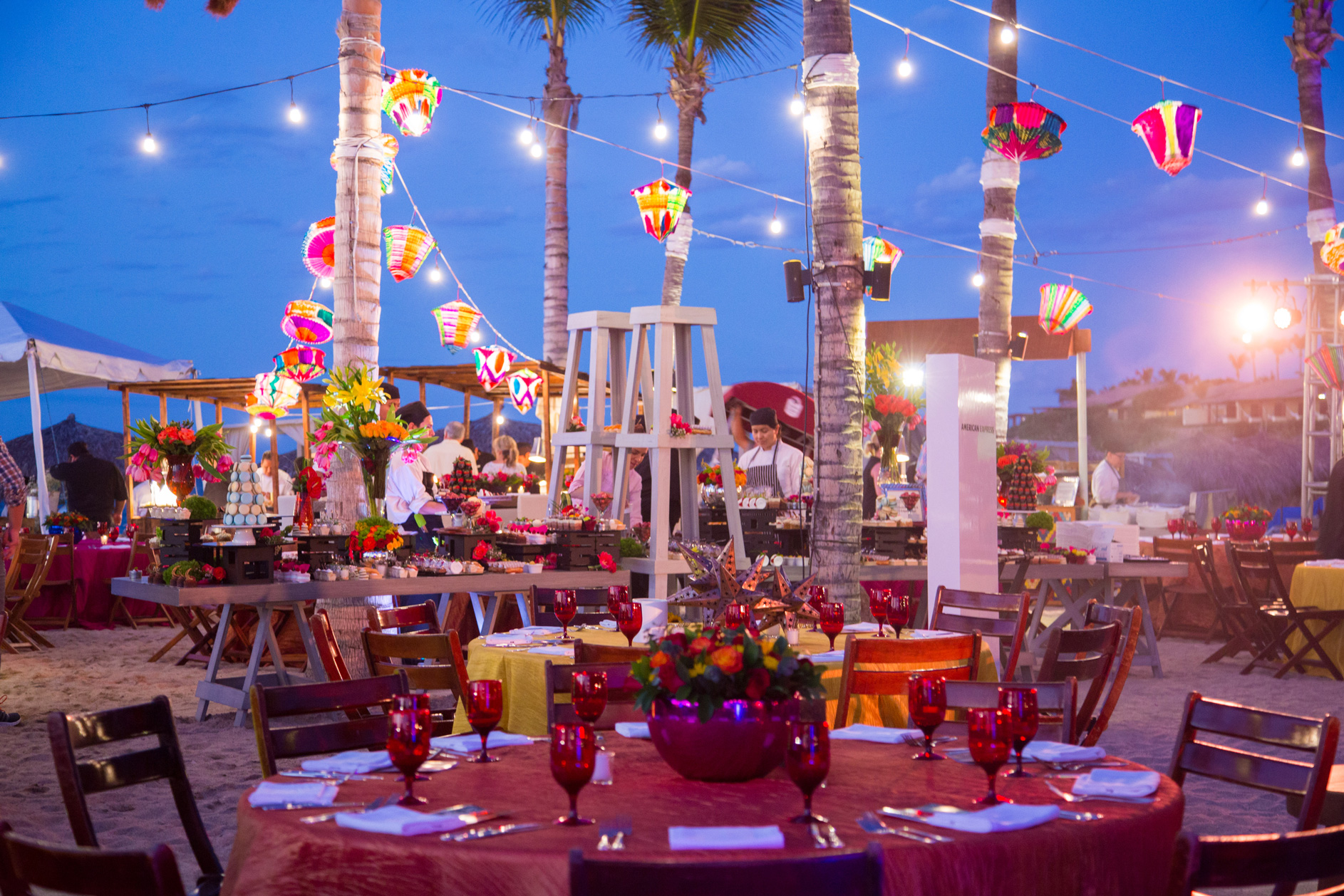
Gourmet & Golf is the clearest expression of that, and it’s the event I look forward to organizing every single year. What started as a modest gathering of chefs and golfers has become one of the signature dates on our calendar — a week where the whole peninsula turns into a stage for the kind of hospitality that can’t be bought off a spec sheet: chefs cooking alongside each other, guests and residents mixing at the same tables, the golf courses hosting something more like a reunion than a tournament. It isn’t the biggest line item in anyone’s annual report. But it’s the kind of legacy event that tells you what a place actually values, and after enough years, it becomes part of people’s own family traditions, not just ours.
The obligation that doesn’t show up in a revenue chart
I’d be doing this story a disservice if I pretended the growth has been uncomplicated. Lankenau’s piece doesn’t dodge it, and neither should I: from the earliest days, this development faced real accusations of displacing local residents, and more recently there have been disputes over beach access, including a conflict just months ago involving neighbors in Punta de Mita who are pushing back on construction of one of our newer hotels. Any honest account of twenty-five years here has to hold both truths at once — that this project transformed a forgotten stretch of Nayarit into one of the most valuable tourism regions on the continent, and that transformation of this scale always has a human cost that deserves to be taken seriously rather than smoothed over in a press release.
What I can speak to, from where I sit, is that the hoteliers and teams who’ve built this place understand that our obligation to the town of Punta de Mita didn’t end when the first hotel opened — it’s ongoing. That means local hiring pipelines that have turned line cooks into executive chefs and given a generation of Nayarit families a career path that didn’t used to exist here. It means supporting the schools, the clinics, and the small businesses that keep the original village functioning alongside the resort that grew up next to it. It means showing up to the hard conversations about beach access and construction, not just the ribbon cuttings. We don’t always get it right, and I don’t think anyone building at this scale ever fully does. But the difference between a development and a home is whether the people who were here first still recognize the place, and still have a stake in it. That’s the work that doesn’t show up in a Ministry of Tourism chart, and it’s the work I think about as much as any opening or renovation.
Infrastructure as a promise, not just a spec sheet
By midday I’m usually walking around a club sometimes a construction site or sitting through an infrastructure review with our CEO Alejandro de la Barreda, and it’s easy for that to sound like the least romantic part of the job. It isn’t. Every road, every stretch of underground utility work, every hour spent maintaining a golf course to championship standard is a promise we make to guests and residents alike: that the experience here won’t erode as the place grows. Keeping three hotels, two golf courses, and roughly 850 homes running at a five-star standard, day after day, for a quarter century, is its own quiet form of hospitality. It’s also, frankly, why brands like Four Seasons St. Regis, and now Montage and Pendry have been willing to build alongside us. World-class amenities aren’t a marketing claim if the infrastructure behind them is impeccable; they’re just what happens when you refuse to let anything slip.
Telling the story, and letting others tell it too
By late afternoon, if it’s a normal week, I’m usually on a call with our PR Team , a journalist, a photographer’s crew, or a travel editor putting together next year’s coverage. Press relations have mattered enormously to Punta Mita’s growth — Forbes calling this “one of the most private and secure locations in the world” back in 2016, the New York Times documenting the arrival of “cosmopolitan, higher-spending residents,” Bloomberg naming Riviera Nayarit the next big ‘it’ destination. Those pieces did real work introducing this place to the world, the same way Lankenau’s Whitepaper article is doing now, translating three decades of decisions into a story that makes sense from the outside. I’ve learned to be genuinely grateful for good journalism about this place, including the kind that asks hard questions, because a development that can’t withstand scrutiny isn’t one I’d want to be part of building.
What the numbers don’t show you
By the time evening comes along I am usually toward whatever event is closing out the day, a Gourmet & Golf dinner or just the quiet hour when the restaurants like Il Molo start to fill — I find myself thinking less about the $1.2 Billion dollars or the 1,000% growth figure and more about the particular waiter who’s worked the same terrace for over 10 years, or the family from Guadalajara who bought their first lot here in 2004 and are now building a house for their daughter. Fernando Senderos Mestre’s vision gave this place its bones: the discipline, the scale, the decades-long patience that few developers have the stomach for. But the sixteen years I’ve spent inside it have convinced me that what actually holds Punta Mita together isn’t the layers of value on a balance sheet. It’s the sense of belonging we’ve built, one dinner, one hire, one hard conversation, and one golf tournament at a time and one wave at a time — and that’s the story I hope this place keeps telling for the next twenty-five years.
— Embo